
By Will Wei
Hands-on practice is crucial in learning ultrasound-guided vascular access. Commercial ultrasound phantoms can be prohibitively expensive, limiting access to this crucial training. This guide has been created for making affordable gelatin ultrasound phantoms. These homemade models provide an excellent and cost-effective way to practice and refine ultrasound scanning techniques.
Commercial phantoms consist of a silicone block with practice vessels filled with a liquid such as simulated blood. We are occasionally able to borrow these models for some of our larger workshops.
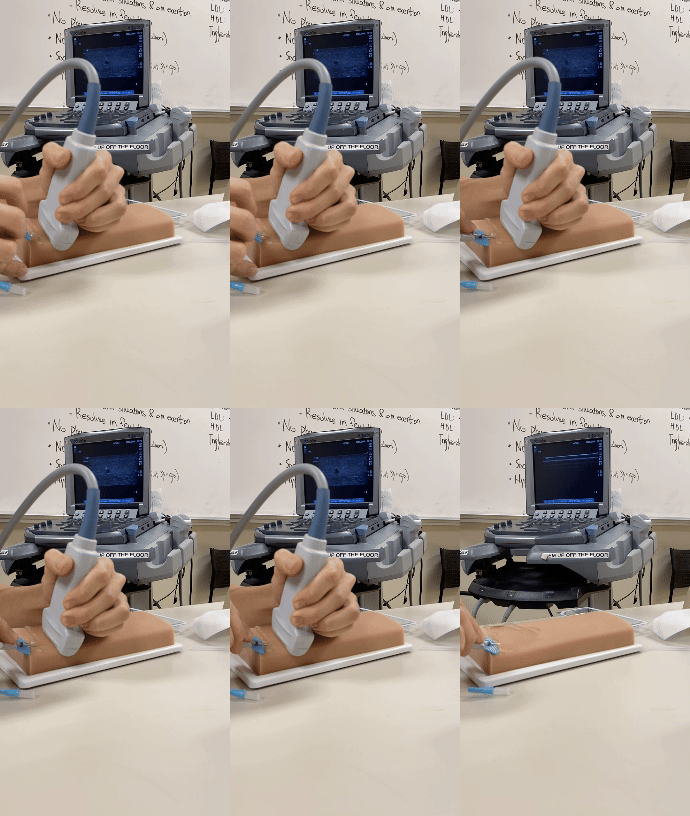
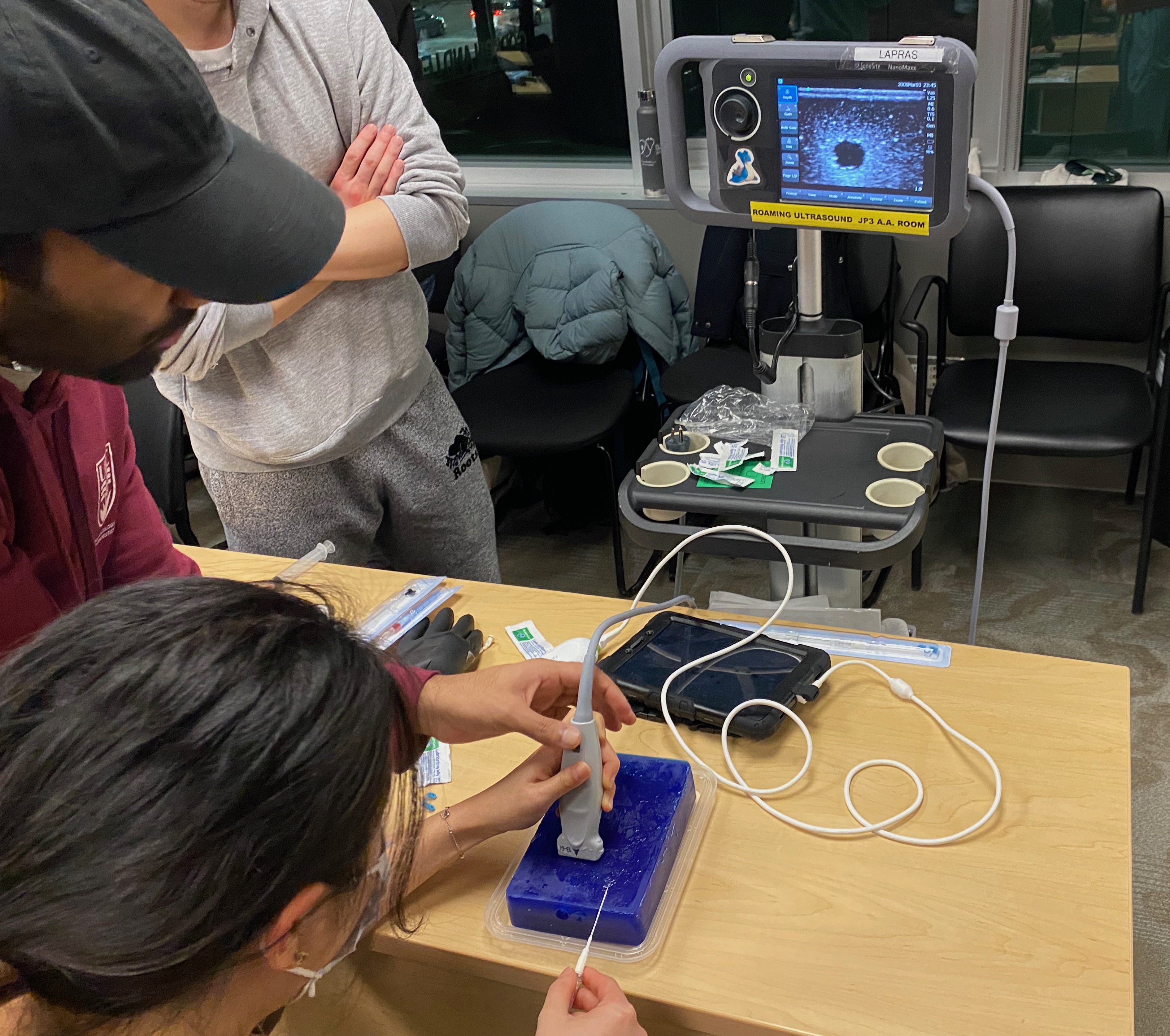
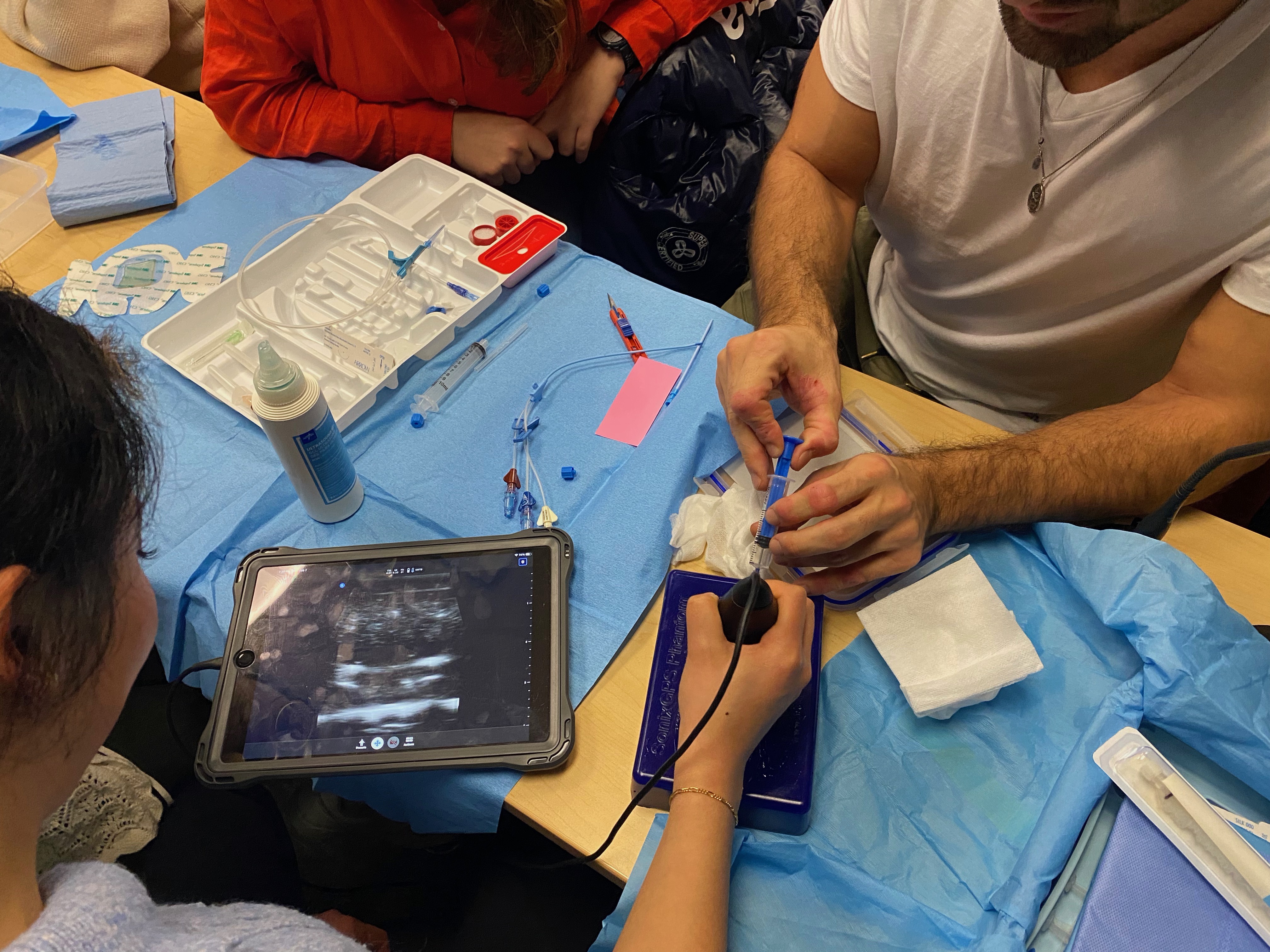
Commercial phantom models cost hundreds of dollars each. Gelatin phantoms can be made easily at home for a much more affordable price.
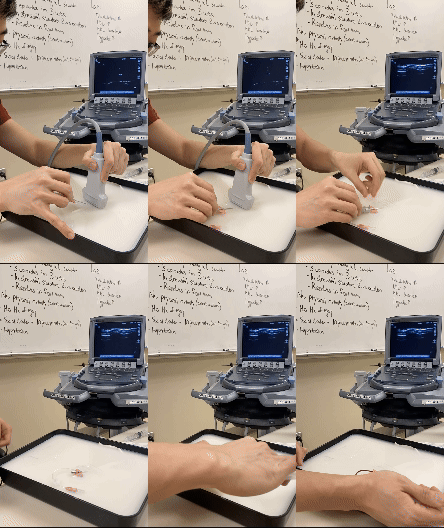
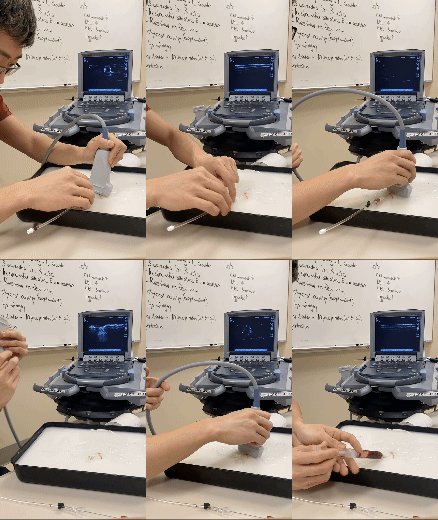

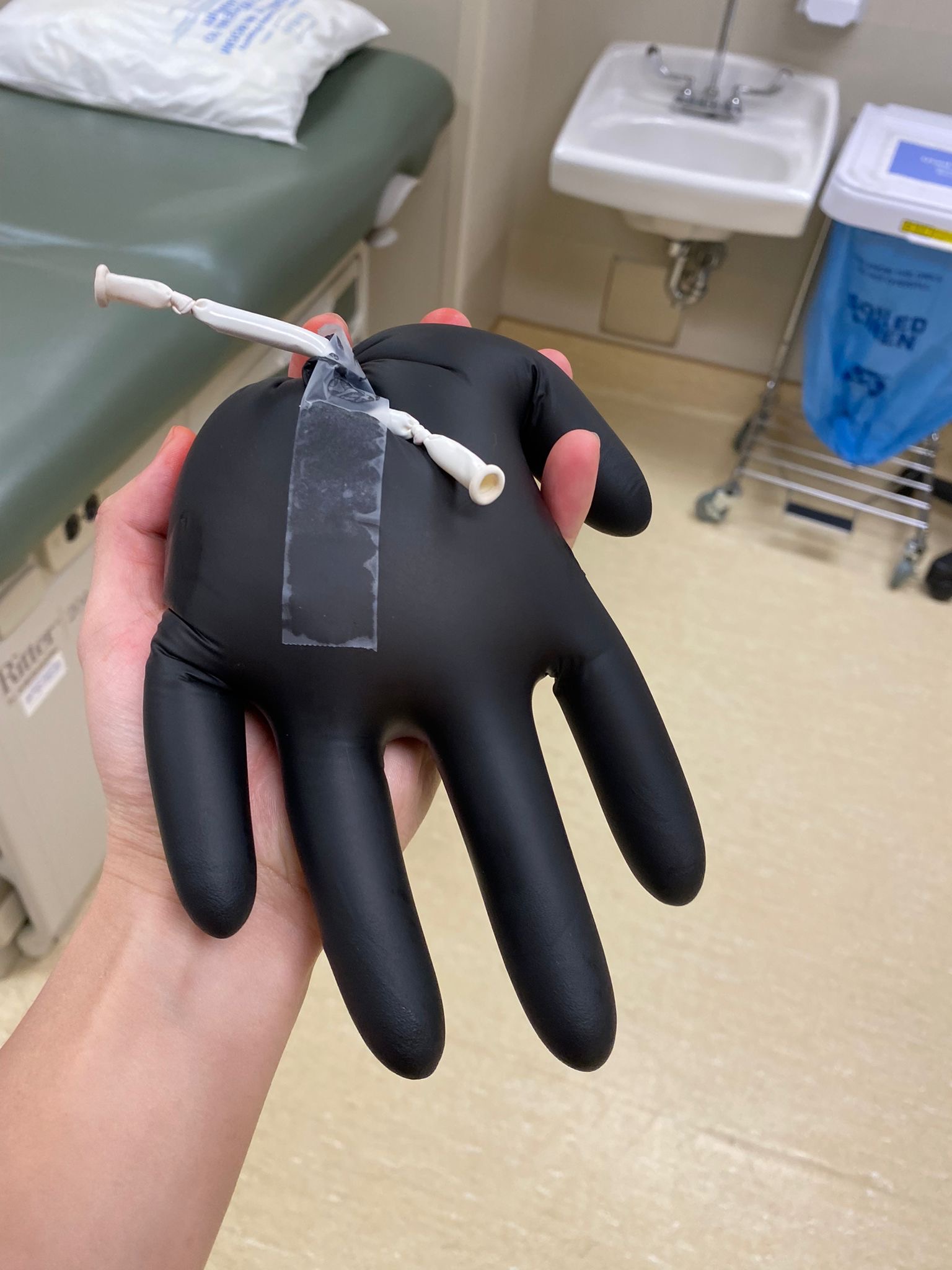
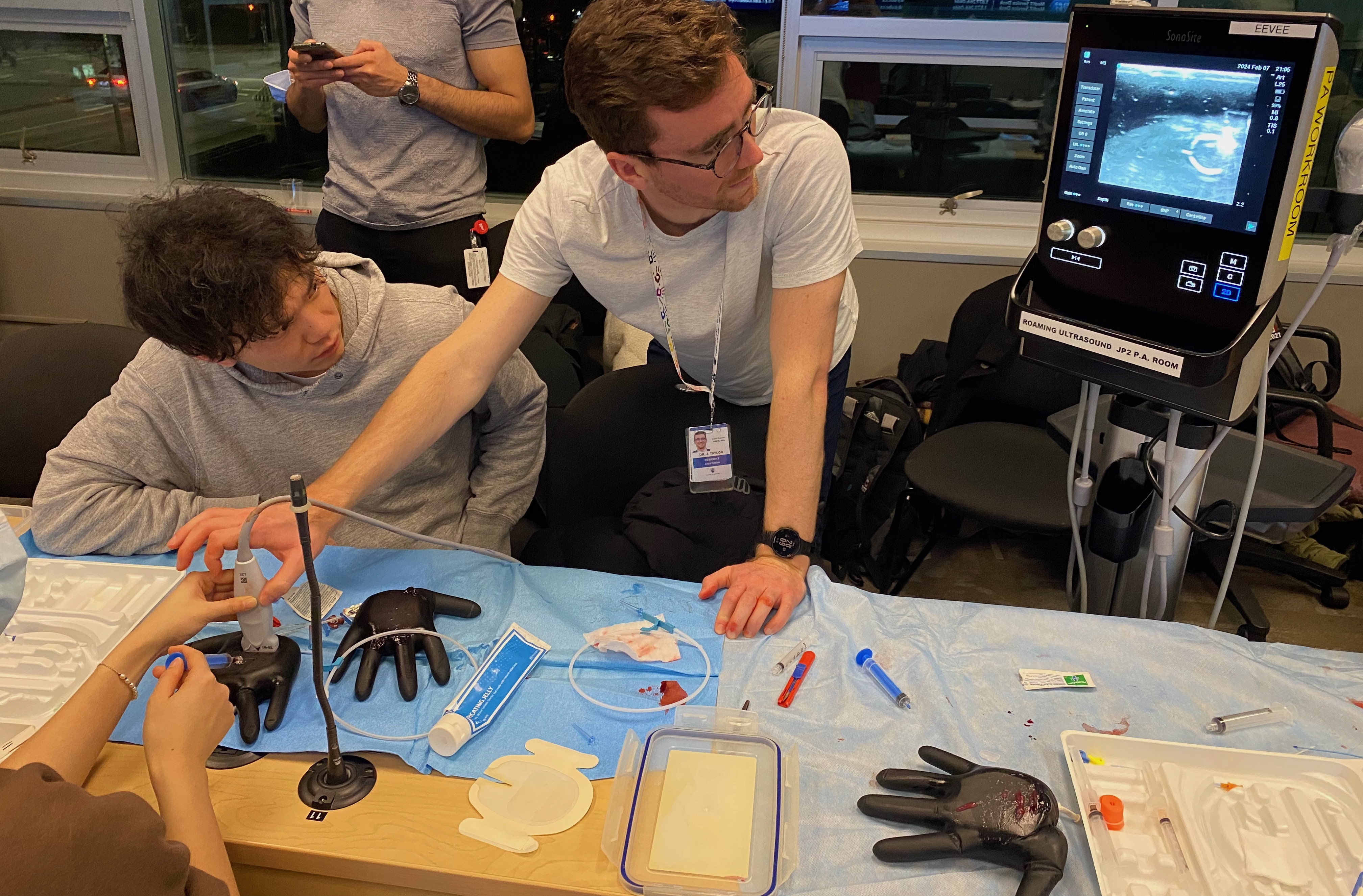
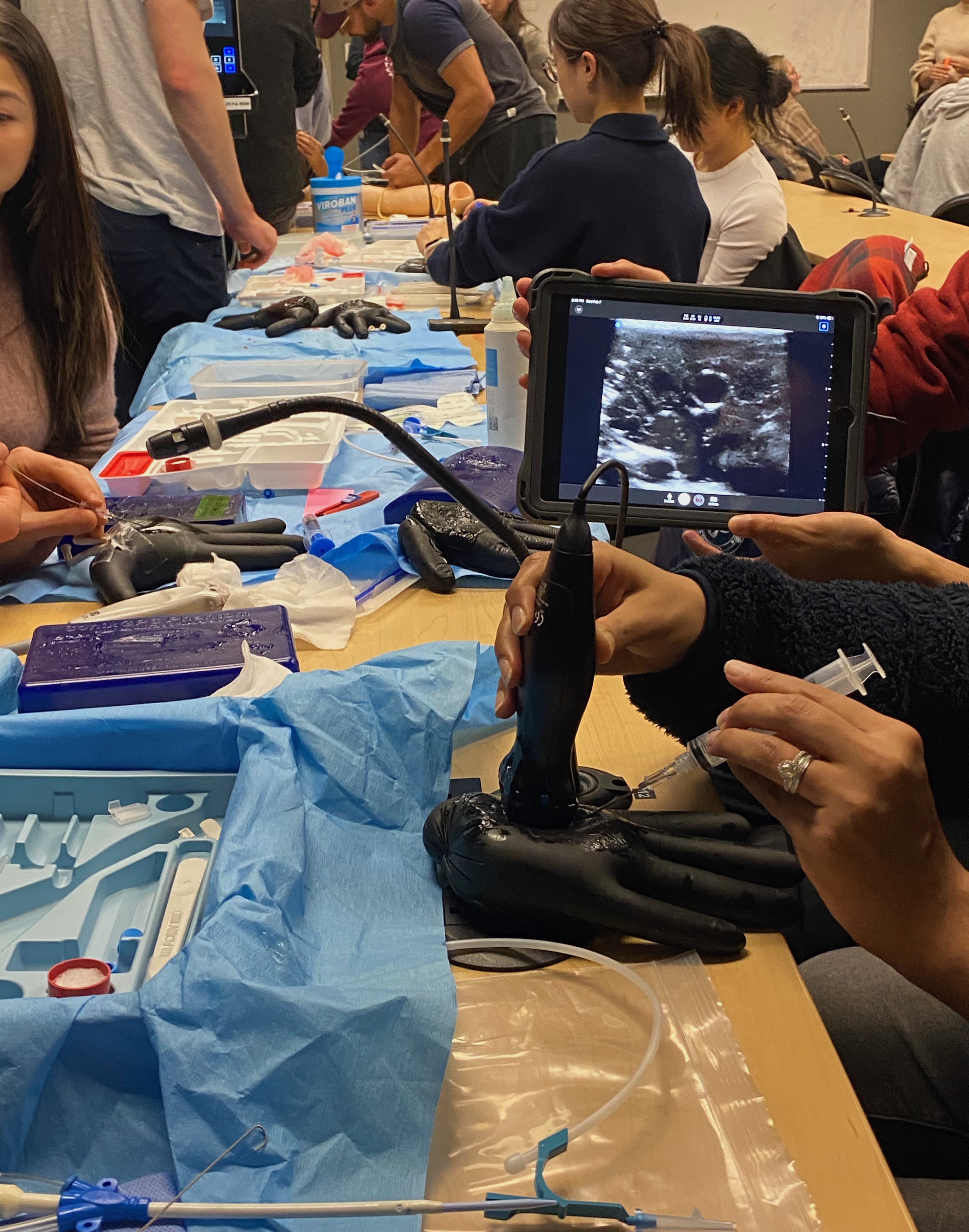
Gelatin phantoms can also be made easily in rubber gloves. Although rubber glove phantoms are hand-shaped, one should note that ultrasound is not typically used for vascular access of the superfical veins. One should think of these rubber glove gelatin phantoms as a neck or as a limb for ultrasound-guided vascular access of deeper vessels. The benefit of these rubber glove phantoms is that they are considerable easier to make compared to the gelatin tray phantoms.
Making Gelatin Phantoms
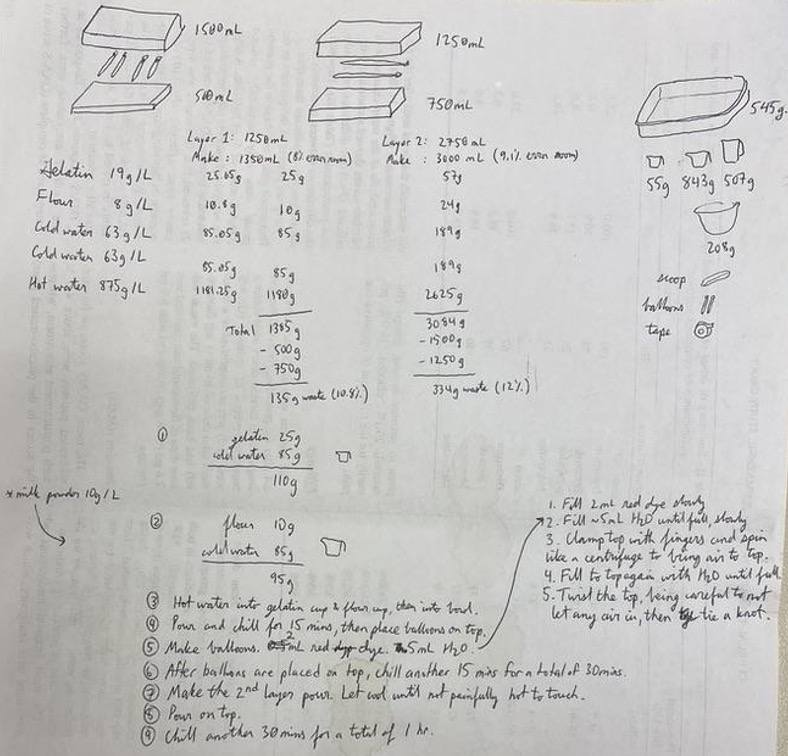
The following ingredients and ratios were determined from trial and error through multiple cycles of gelatin phantoms. Gelatin dissolves easily in hot (but not boiling) water. Milk powder can be used to make the gelatin phantoms opaque. Flour can be added to alter the consistency of the phantoms, but it alone will not render the phantoms opaque.
For tray phantoms, nonstick deep baking trays are appropriate. For glove phantoms, opaque rubber gloves will work. You will also need long, thin balloons for the simulated vessels. Balloon animal balloons are excellent for this purpose. Red food coloring can be used for simulated blood and syringes are necessary to fill the balloons.
| Ingredient | Batch (3050mL) | Concentration per L |
| Gelatin | 90 g | 30 g/L |
| Cold water (for gelatin) | 200 mL | 63 mL/L |
| Hot water | 2850 mL | 875 mL/L |
| Ingredient | Layer 1 (1350mL) | Layer 2 (3050mL) | Concentration per L |
| Gelatin | 40 g | 90 g | 30 g/L |
| Cold water (for gelatin) | 85 mL | 200 mL | 63 mL/L |
| Flour | 10 g | 24 g | 8 g/L |
| Milk powder | 14 g | 30 g | 10 g/L |
| Cold water (for flour) | 85 mL | 200 mL | 63 mL/L |
| Hot water | 1180 mL | 2650 mL | 875 mL/L |
- Make the simulated vessel balloons
- Add several drops of red food coloring into a balloon
- Fill the balloon near-full with water using a syringe.
- Pinch off the top of the balloon and spin the balloon in a circle to bring air bubbles to the top of the balloon via centripedal force
- Fill the balloon full with water using a syringe
- Twist the top and tie a knot, being careful to not introduce air into the balloon
- Mix the gelatin, milk powder, and flour with a small amount of cold water.
- Pour the gelatin-milk-flour mixture into a large bowl containing the hot water.
- Tray phantoms
- Pour a half-inch layer of the gelatin mixture into the tray
- Chill for 15 minutes in the fridge
- Place balloons on top of the mixture and pour another half-inch layer
- Chill for an additional 15 minutes.
- Pour the remaining mixture into the tray
- Chill and store tray phantom in the refrigerator
- Glove phantoms
- Place 2 balloons into a glove
- Fill the glove with gelatin mixture
- Twist the opening of the glove and tape the opening so that no mixture can leak out
- Chill and store glove phantom in the refrigerator
Other attempts
In prior attempts, I have also trialed using plastic fish bait to make phantoms. I have found the process to be more expensive, dangerous, and difficult compared to gelatin phantoms.
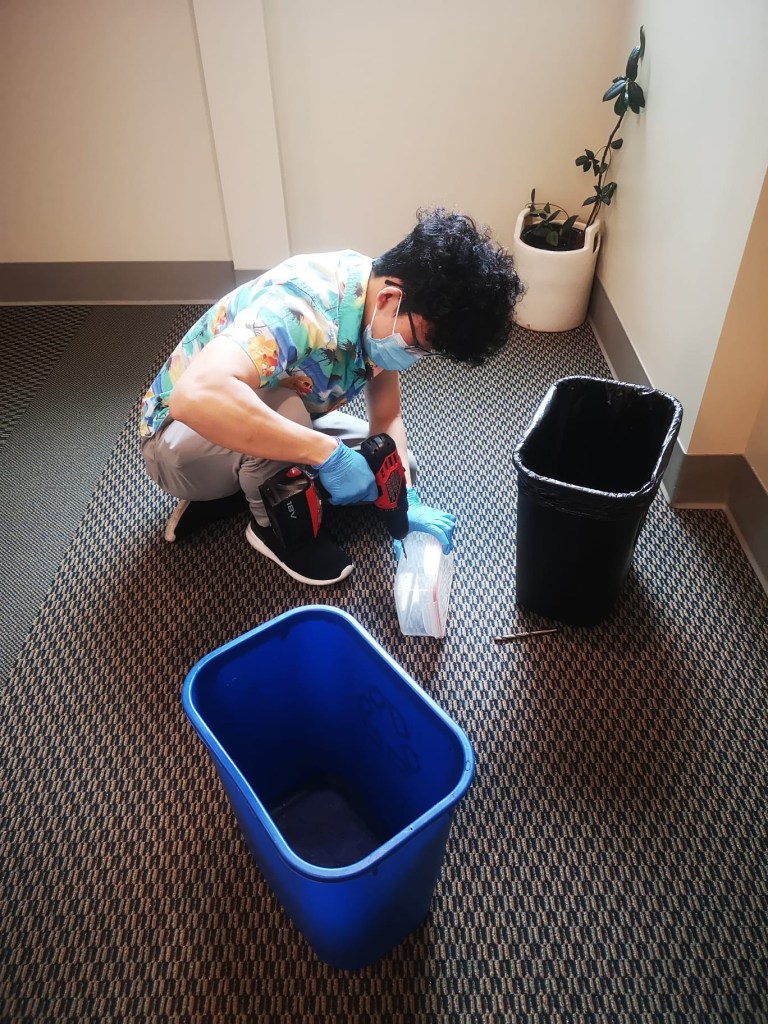
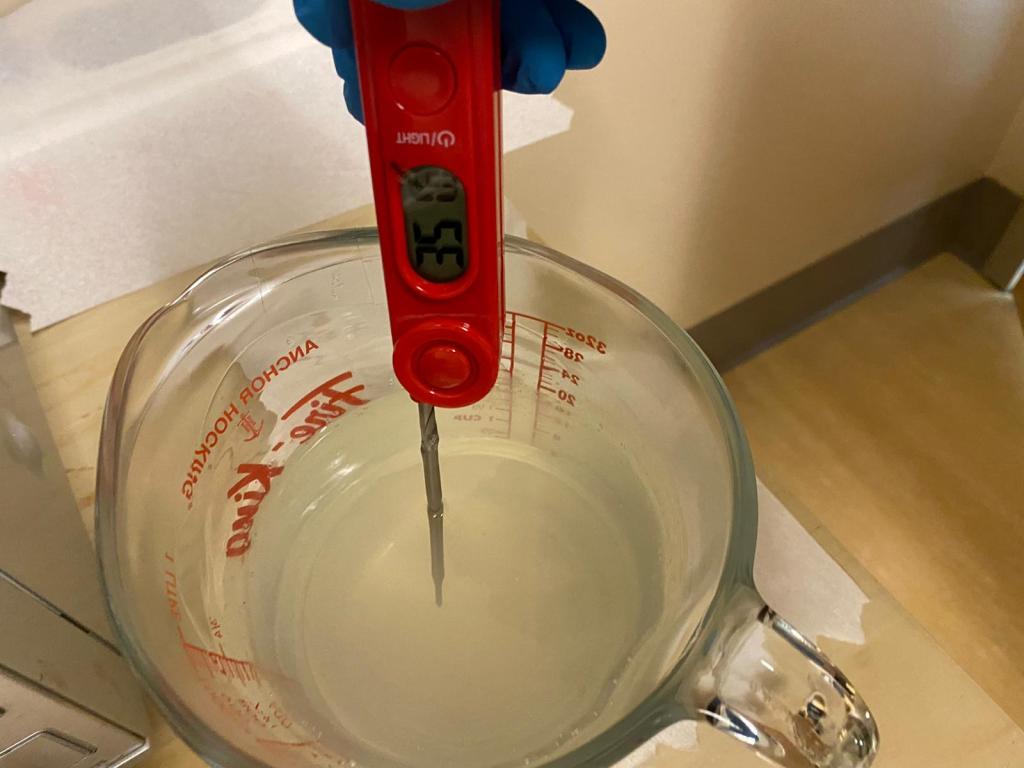
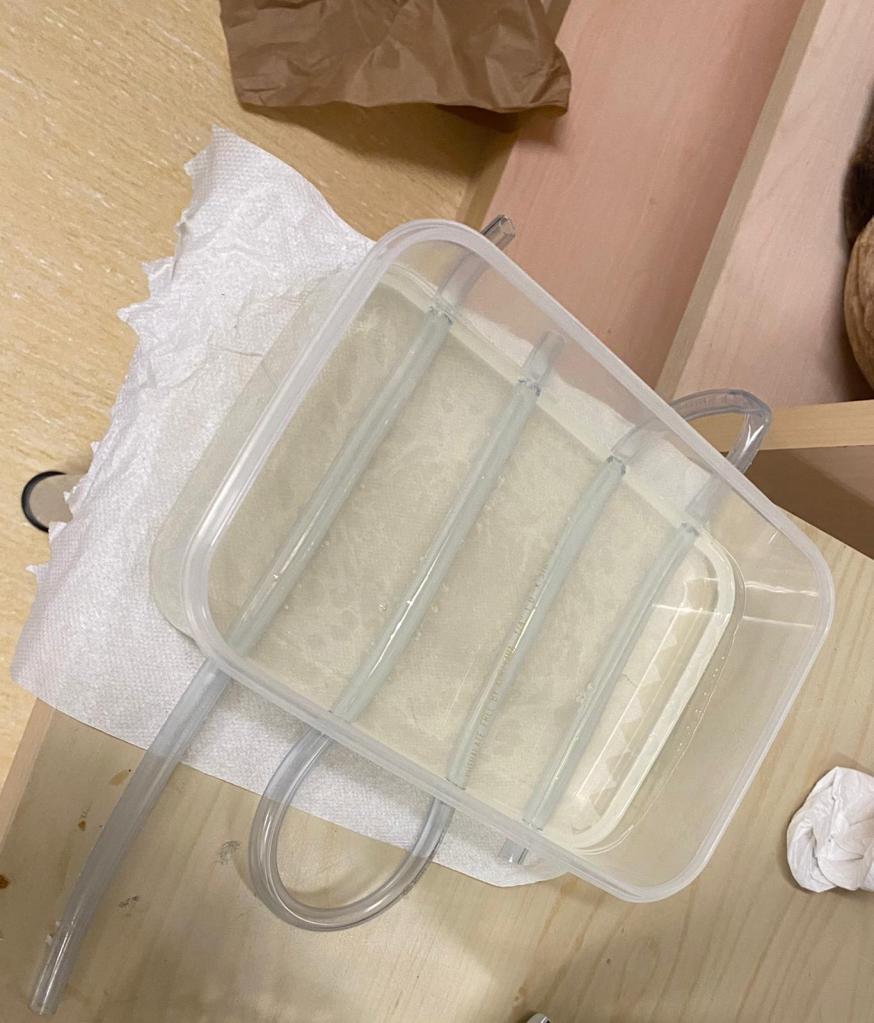
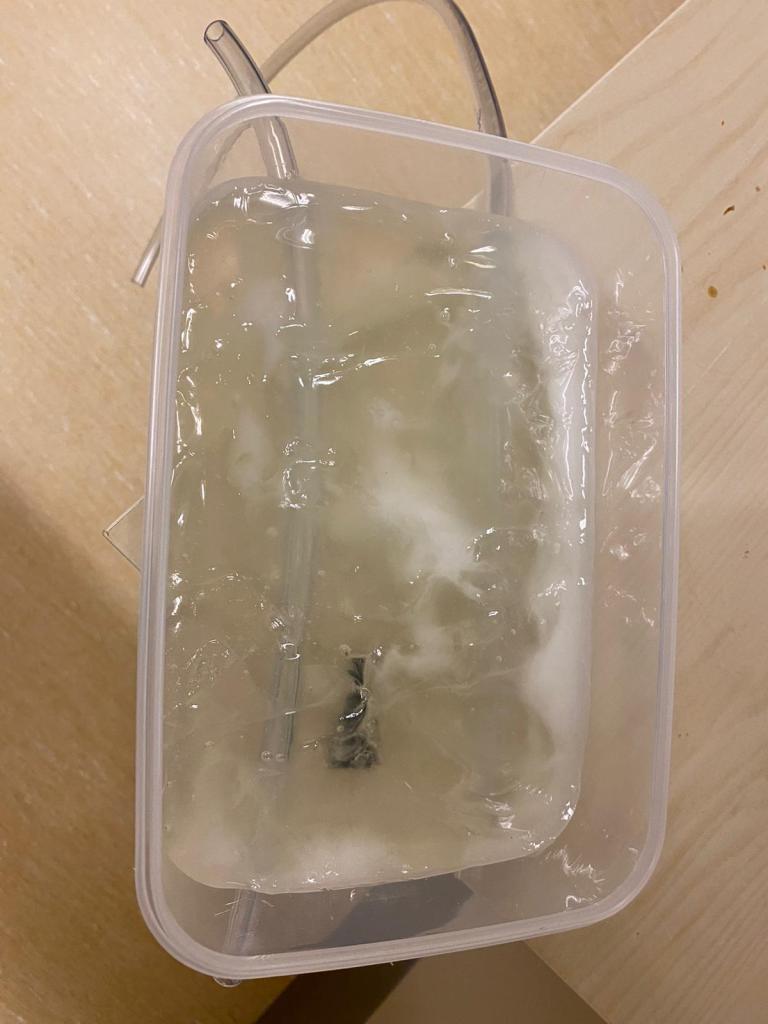
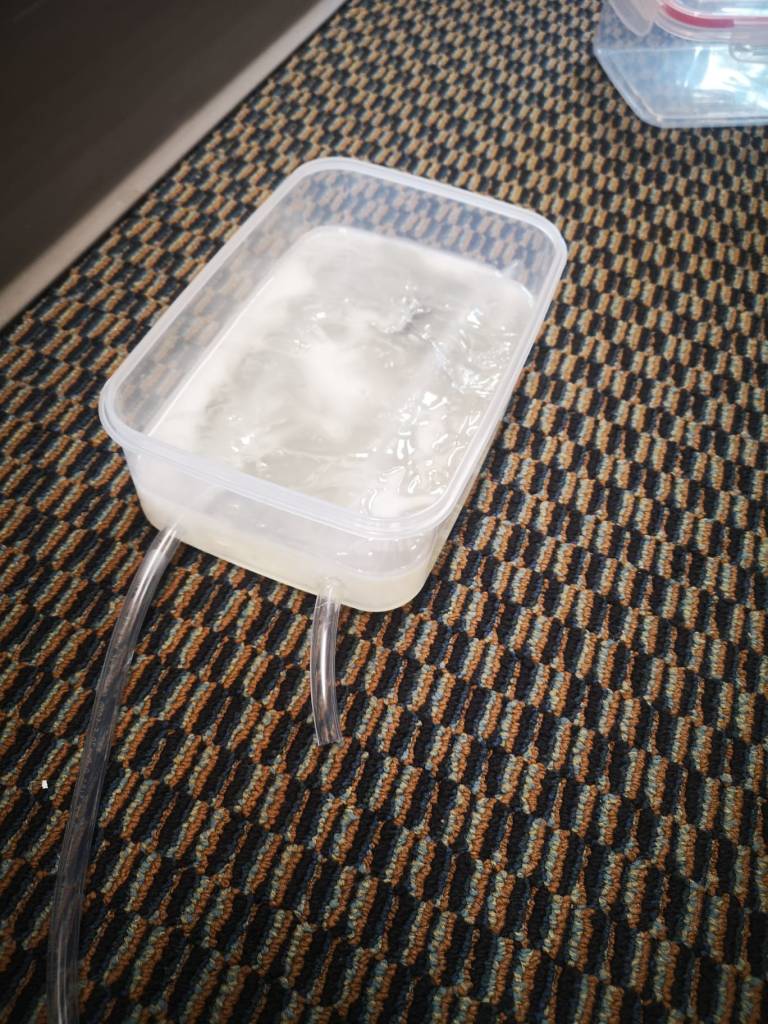
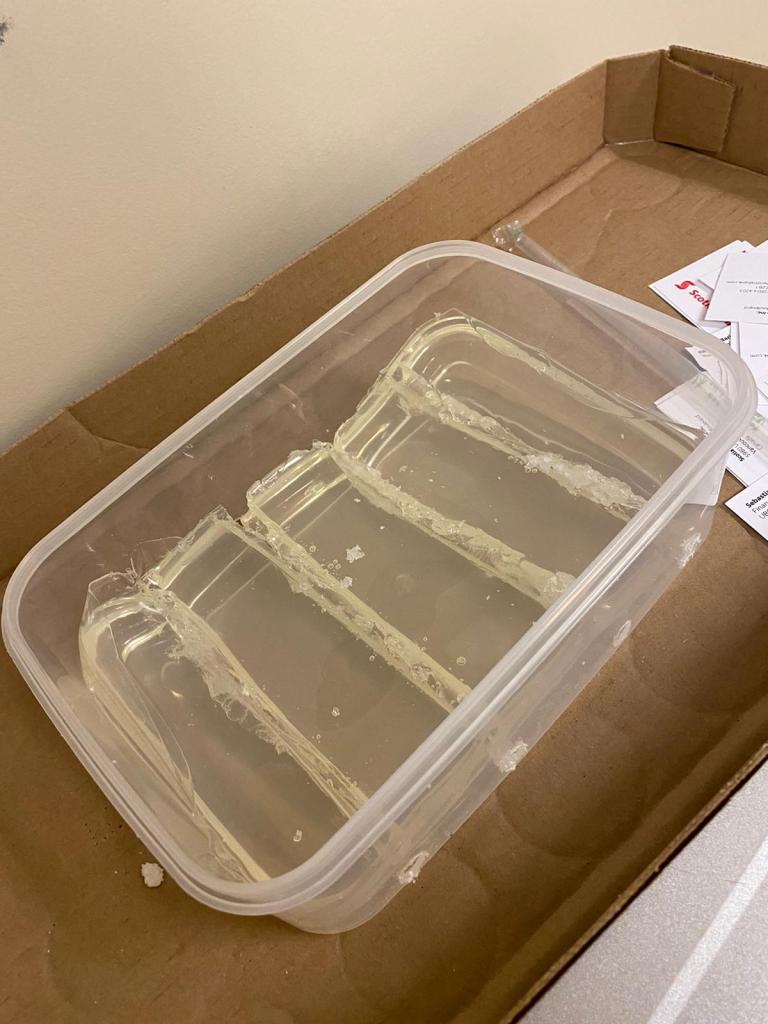
I would recommend starting with the gelatin phantoms as they are easy to create and are cost-effective as training models for ultrasound-guided vascular access.
Please do not hesitate to contact me if you have any questions!
 UBC Ultrasound Club